Original Article
A novel buccal bone augmentation technique around non-contained and exposed implant threads: Clinical, histologic and histomorphometric evaluations on the treatment outcome
Myron Nevins a, Dong-Wook Chang b, Stefano Parma-Benfenati c, Primo Galletti d, Chia-Yu (Jennifer) Chen a, Miruna Maracine e, Traian Comanescu f, Wei-Jen Chang g, David M. Kim a
*Journal of Dental Sciences is an SCI(E)-indexed international academic journal
a
Department of Oral Medicine, Infection and Immunity, Division of Periodontology, Harvard School of Dental Medicine, Boston, MA, USA
b
Clinical Associate Professor of Kyunghee University School of Dentistry, Dental Hospital, Republic of Korea
c
Department of Surgical Sciences, Section of Periodontology, University of Turin, Turin, Italy
d
Department of Translational Medicine, School of Dentistry, University of Ferrara, Ferrara, Italy
e
Private Practice (Dentalevo Clinic), Bucharest, Romania
f
Private Practice (ARRA Dental Clinique), Bucharest, Romania
g
School of Dentistry, College of Oral Medicine, Taipei Medical University, Taipei, Taiwan
Read the article:
Read the article:
Evidence-based performance of G·DIFF implants
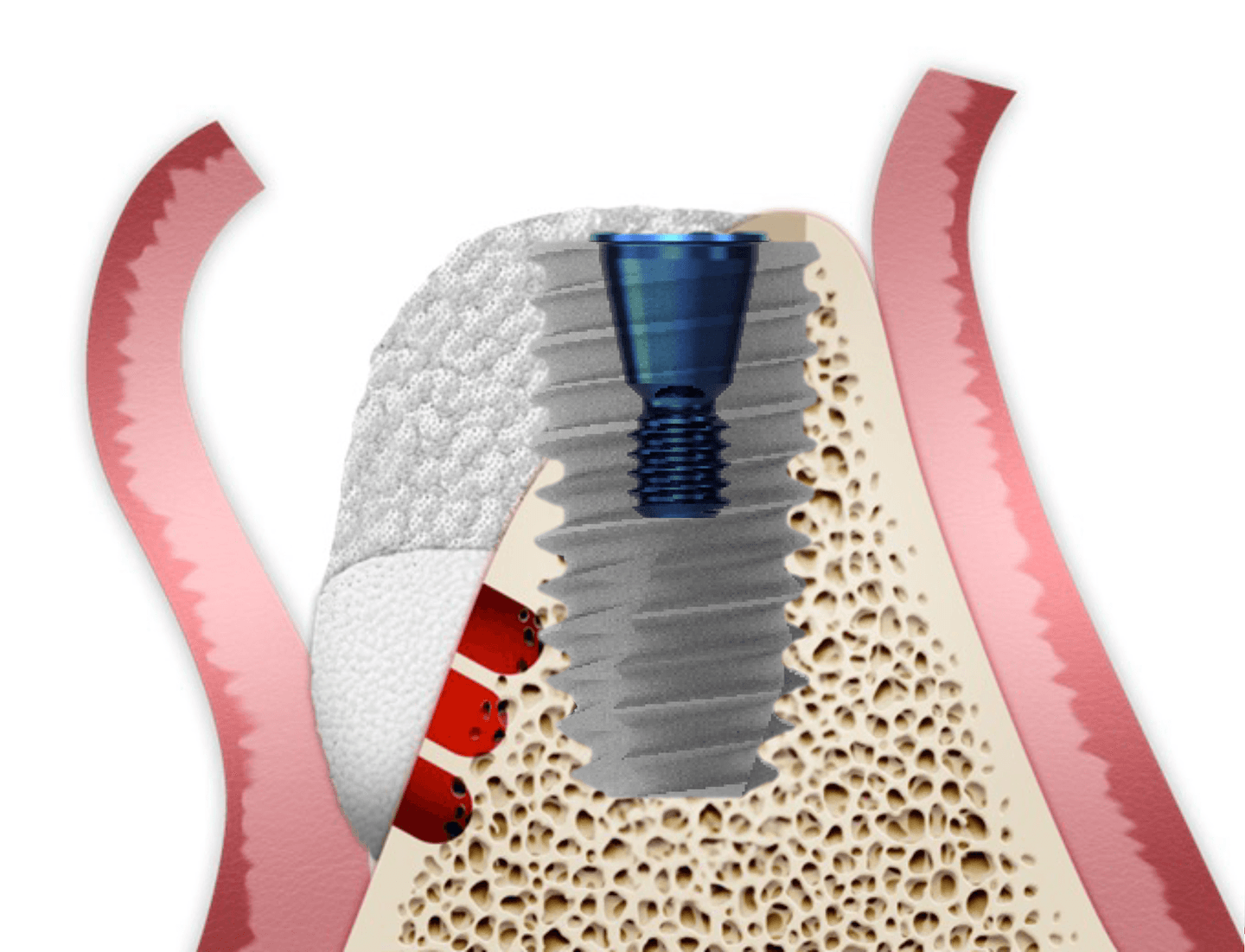
In a recent prospective study on challenging buccal-bone-defect cases, 17 G·DIFF implants were placed and three were retrieved at six months for histologic analysis. Newly formed mineralized tissue was observed in direct contact with the implant surface, yielding a mean total bone-to-implant contact (BIC) of 67.32 ±
6.27 % and a buccal BIC of 66.56 ± 5.52 %. No wound dehiscence or infection occurred. The authors concluded that, even with a standard two-layer bovine graft, G·DIFF implants integrated predictably, transforming exposed threads into stable supporting bone.
These results confirm that G·DIFF implants achieve reliable osseointegration and long-term stability, offering clinicians a safer and more predictable solution for non-contained buccal-defect cases.